

Choosing a good property surveyor in the UK means selecting a RICS-registered professional who offers the right survey level for your property type and risk profile. A1 Surveyors Ltd, based in Nottingham, specialises in Level 2 and Level 3 RICS Home Surveys and Valuations to help buyers and sellers make informed decisions. This guide covers RICS regulation, selection criteria, and professional indemnity insurance to help you find a reliable expert.
RICS Regulation and Standards
The Royal Institution of Chartered Surveyors (RICS) is the global professional body for the land, property, construction, and infrastructure sectors. RICS regulation is a system of standards, ethics, and competency requirements that ensures surveyors operate with integrity and technical proficiency. In the UK, RICS is the primary regulator for home surveyors, setting the mandatory standards for Level 1, Level 2, and Level 3 surveys. For additional details, review the Legal Notice.
Understanding RICS Home Survey Levels
RICS defines three distinct survey levels, each with a specific scope and purpose. A Level 1 survey is a basic condition report suitable for new builds or simple properties. A Level 2 survey is a more detailed condition report that identifies defects and provides advice on repairs. A Level 3 survey is a comprehensive building survey that provides a detailed assessment of the property's condition, structure, and fabric. For additional details, review the Privacy Policy.
For most buyers of older or complex properties, a Level 3 survey is the recommended standard. A1 Surveyors Ltd specialises in providing Level 2 and Level 3 RICS Home Surveys, ensuring that clients receive the depth of analysis required for high-value or complex transactions. The RICS Home Survey Standard, a professional statement, dictates the minimum requirements for these reports, including the need for a clear summary of defects and a costed schedule of repairs where applicable.
The Importance of RICS Membership
Being a RICS member is a critical indicator of a surveyor's competence. RICS members must adhere to a strict code of ethics and undergo continuous professional development (CPD) to maintain their registration. This ensures that surveyors stay current with building regulations, construction techniques, and market trends. When selecting a surveyor, verify their RICS membership status and check for any disciplinary actions on the RICS register.
RICS also provides a complaints scheme for clients who are dissatisfied with a surveyor's work. This adds an extra layer of protection for consumers. By choosing a RICS-registered surveyor, you are accessing a regulated profession with established standards and recourse mechanisms. A1 Surveyors Ltd operates under these RICS standards, providing clients with a reliable and professional service.
Surveyor Selection Criteria
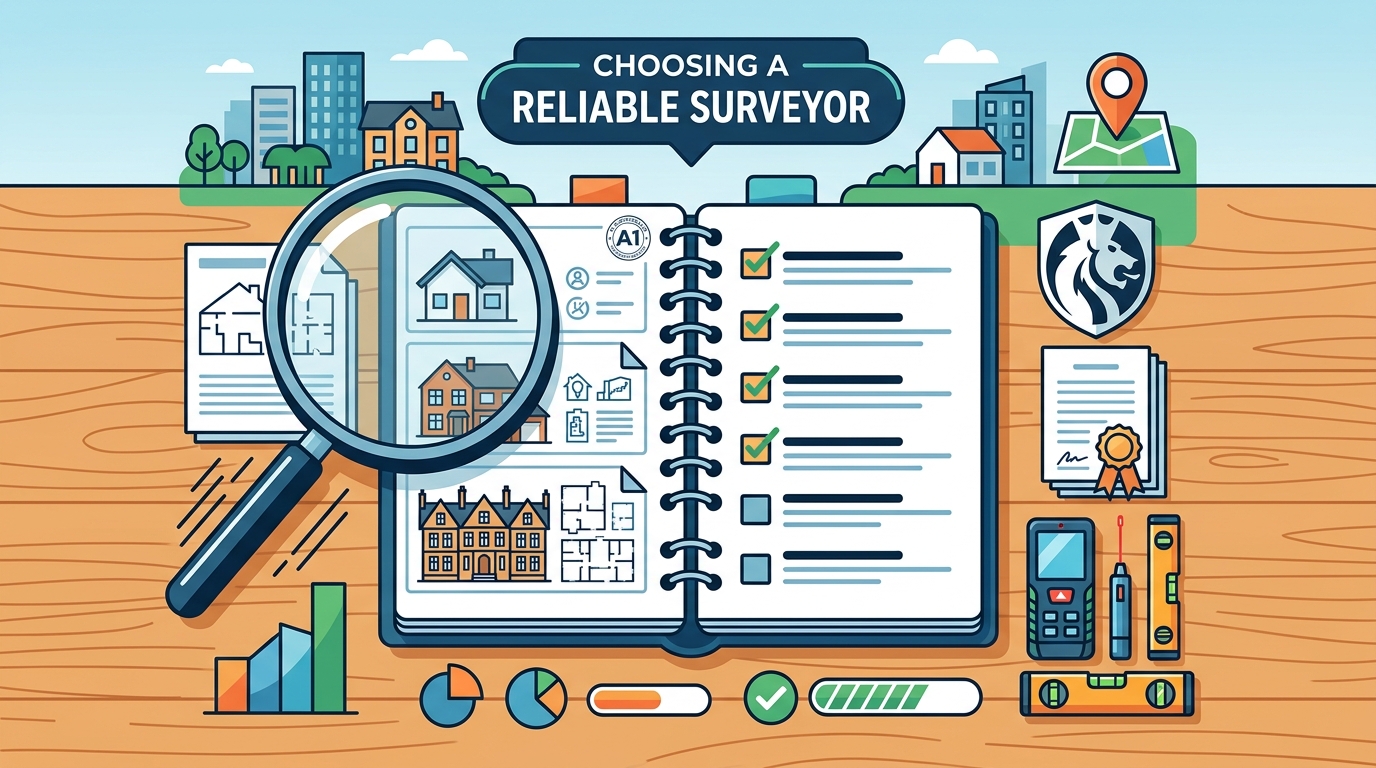
Selecting the right surveyor involves more than just checking their RICS membership. You need to assess their experience, local knowledge, and communication style. A good surveyor will provide a clear, actionable report that helps you make an informed decision about the property.
Experience and Specialisation
Look for a surveyor with specific experience in the type of property you are buying. For example, a surveyor who specialises in Victorian terraces will have a deeper understanding of common issues like subsidence, damp, and structural movement in those buildings. A1 Surveyors Ltd has a team of seasoned professionals who excel in providing Level 2 and Level 3 RICS Home Surveys with precision and expertise. Their focus on precision and accuracy ensures that clients receive a thorough assessment of the property's condition.
Local knowledge is also a key factor. A surveyor who is familiar with the local area will understand specific risks, such as flood zones, ground conditions, and local building practices. This local insight can be invaluable in identifying potential issues that a non-local surveyor might miss. When evaluating a surveyor, ask about their experience with similar properties in your area.
Communication and Report Quality
The quality of the survey report is paramount. A good surveyor will provide a clear, well-structured report that is easy to understand, even for non-technical readers. The report should include a summary of the property's condition, a detailed list of defects, and recommendations for repairs. It should also include a costed schedule of repairs where possible, helping you to budget for any necessary work.
Communication is equally important. A good surveyor will be responsive to your queries and willing to explain the findings of the report in plain language. They should be available to discuss the report with you and answer any questions you may have. A1 Surveyors Ltd prioritises a client-centric approach, striving to deliver personalised service and clear communication throughout the survey process.
Comparison of Survey Levels
| Survey Level | Scope | Best For | Report Detail |
|---|---|---|---|
| Level 1 | Basic condition report | New builds, simple properties | Summary of condition, no detailed defect list |
| Level 2 | Detailed condition report | Most residential properties | Identifies defects, provides repair advice |
| Level 3 | Comprehensive building survey | Older, complex, or modified properties | Detailed assessment of structure, fabric, and condition |
Choosing the right survey level is a critical part of the selection process. A Level 2 survey is suitable for most standard residential properties, while a Level 3 survey is recommended for older, larger, or modified properties. A1 Surveyors Ltd offers both Level 2 and Level 3 surveys, allowing you to choose the level that best fits your needs and the property's characteristics.
Professional Indemnity Insurance
Professional indemnity insurance is a type of liability insurance that protects clients against financial loss caused by a professional's negligence, error, or omission. For surveyors, this insurance is a critical safety net that ensures you are compensated if a surveyor fails to identify a significant defect that causes you financial harm.
Why Professional Indemnity Insurance Matters
When selecting a surveyor, always ask for proof of their professional indemnity insurance. This is a simple but important step that can protect you from significant financial loss. A1 Surveyors Ltd, as a RICS-registered firm, holds the required professional indemnity insurance, ensuring that clients are protected in the event of a claim. This insurance is a key indicator of a surveyor's professionalism and commitment to their clients.
How to Verify Insurance Coverage
You can verify a surveyor's professional indemnity insurance by asking for a certificate of insurance or by checking with their insurance provider. The certificate should specify the insurer, the policy number, the limit of cover, and the policy period. Ensure that the policy is current and that the limit of cover meets the RICS minimum requirements.
It is also worth asking about the insurer's reputation and financial stability. A reputable insurer is more likely to pay out on a claim, so choosing a surveyor with a well-known insurer can provide additional peace of mind. A1 Surveyors Ltd is committed to providing a high-quality service and holds the necessary insurance to protect its clients. By verifying a surveyor's insurance, you are taking an important step in ensuring that you are working with a reliable and responsible professional.
Key Takeaways
- RICS regulation is the primary standard for home surveyors in the UK, ensuring competence and ethical conduct.
- Level 2 and Level 3 surveys are the most common types of RICS home surveys, with Level 3 recommended for older or complex properties.
- Experience and local knowledge are critical factors in selecting a surveyor, as they impact the accuracy and relevance of the report.
- Professional indemnity insurance is a mandatory requirement for RICS members and provides financial protection for clients.
- A1 Surveyors Ltd specialises in Level 2 and Level 3 RICS Home Surveys and Valuations, offering a client-centric approach.
- Always verify a surveyor's RICS membership and professional indemnity insurance before booking a survey.
- Clear communication and a well-structured report are essential for making an informed decision about a property.
Frequently Asked Questions
What is the difference between a Level 2 and Level 3 survey?
A Level 2 survey is a detailed condition report that identifies defects and provides advice on repairs. A Level 3 survey is a comprehensive building survey that provides a detailed assessment of the property's condition, structure, and fabric. Level 3 is recommended for older, larger, or modified properties.
Is RICS membership mandatory for surveyors?
RICS membership is not legally mandatory for all surveyors, but it is the primary standard for professional home surveyors in the UK. RICS membership ensures that a surveyor meets strict standards of competence, ethics, and continuous professional development.
What is professional indemnity insurance?
Professional indemnity insurance is a type of liability insurance that protects clients against financial loss caused by a professional's negligence, error, or omission. For surveyors, it covers claims for professional negligence, such as failing to identify a significant defect.
How much does a RICS home survey cost?
The cost of a RICS home survey varies depending on the property's size, location, and the type of survey. Level 2 surveys are generally less expensive than Level 3 surveys. It is best to request a quote from a surveyor for an accurate price.
Can I use a survey report from a previous owner?
It is not recommended to rely on a previous owner's survey report, as the property's condition may have changed. A new survey is essential to ensure that you are aware of any current defects or issues.
How long does a RICS home survey take?
A RICS home survey typically takes between 2 and 4 hours, depending on the size and complexity of the property. The report is usually delivered within 3 to 5 working days after the inspection.
What should I do if I am dissatisfied with a survey report?
If you are dissatisfied with a survey report, you can raise a complaint with the surveyor. If the issue is not resolved, you can escalate the complaint to the RICS complaints scheme, which provides an independent resolution process.
Conclusion
Choosing a good property surveyor in the UK is a critical step in protecting your investment. By understanding RICS regulation, evaluating selection criteria, and verifying professional indemnity insurance, you can make an informed decision. A1 Surveyors Ltd, based in Nottingham, offers expert Level 2 and Level 3 RICS Home Surveys and Valuations, providing the precision and client-centric approach you need. To plan your visit, for a quote and booking.