
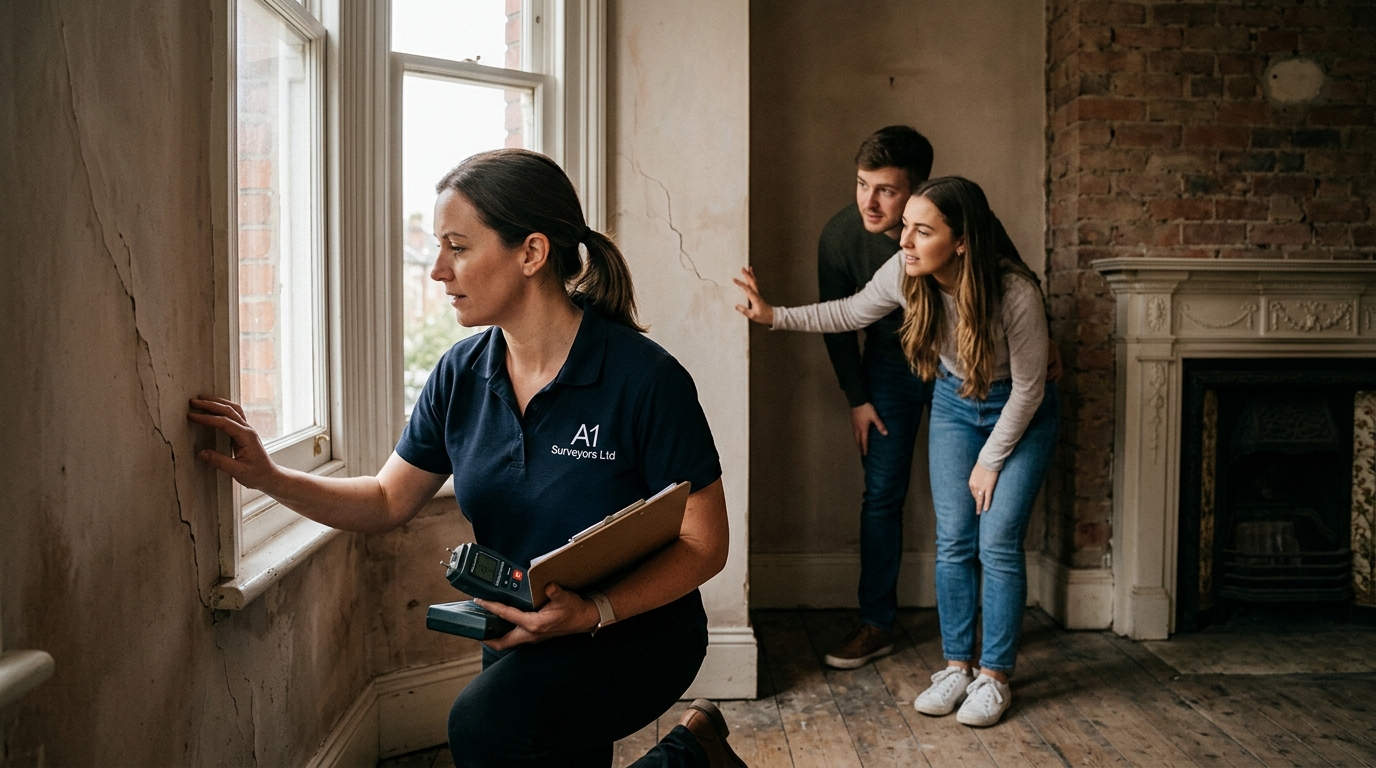
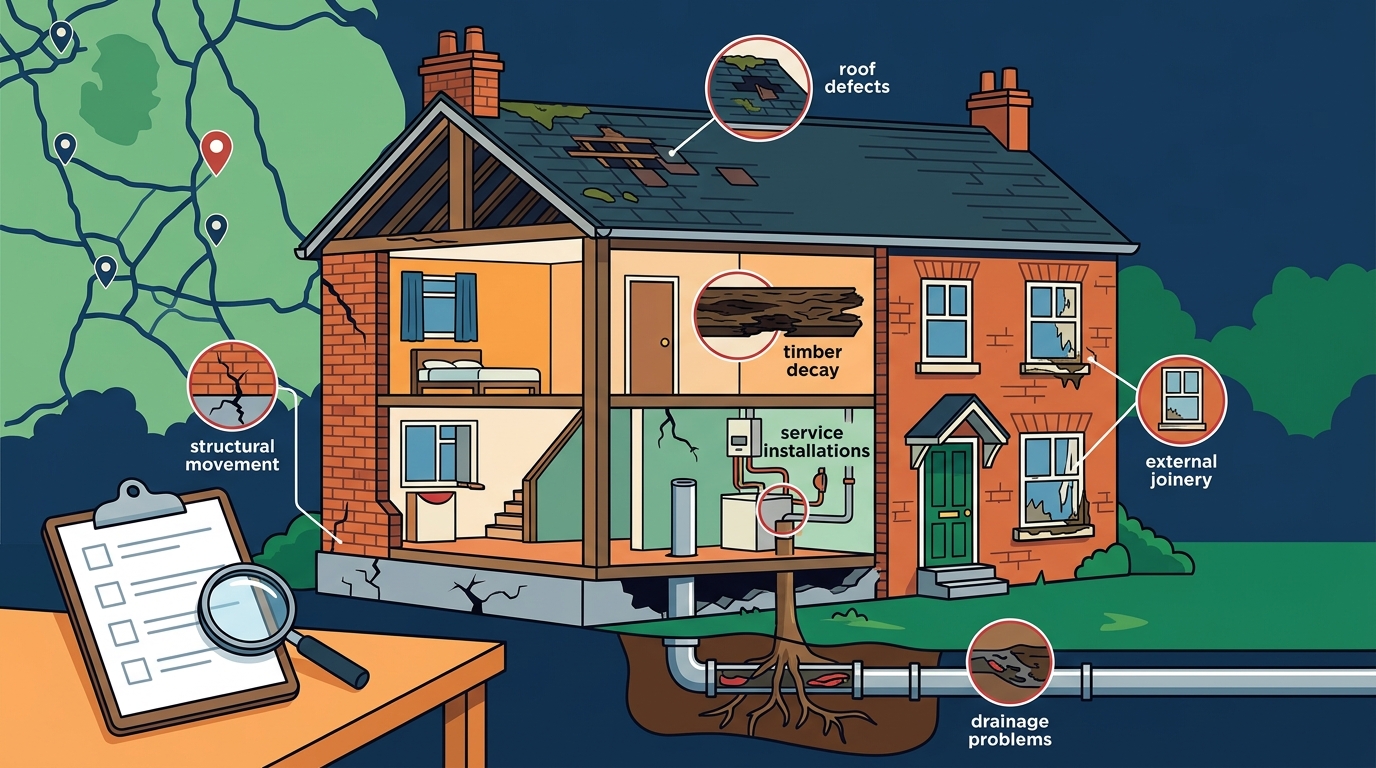
A Level 2 RICS Home Survey is a condition report that identifies visible defects and potential risks in a property. It provides a clear assessment of the building's state, helping buyers make informed decisions. This guide details the specific issues uncovered, including structural movement, roof defects, timber decay, drainage problems, service installations, and external joinery. A1 Surveyors Ltd provides these expert assessments in Nottingham and the Midlands.
Structural Movement
Structural movement is the displacement of a building's components due to changes in the ground beneath it. A Level 2 surveyor looks for visible signs of this movement, such as cracks in walls, skewed door frames, and gaps between the roof and walls. While minor cracking is common in older properties, significant movement can indicate serious foundation problems. For additional details, review the About Us.
Identifying Cracks
Surveyors assess the width, depth, and direction of cracks. Vertical cracks are often less concerning than diagonal or stepped cracks, which may suggest subsidence. The report will note whether cracks are active or dormant. Active cracks require immediate attention and potentially specialist investigation. For additional details, review the Legal Notice.
Foundation Risks
If movement is detected, the surveyor will recommend further investigation, such as a structural engineer's report. This helps determine the cause, whether it is subsidence, heave, or settlement. Understanding the cause is crucial for estimating repair costs and ensuring the property is safe to occupy. For additional details, review the Privacy Policy.
Roof Defects
Roof defects are a primary focus of any home survey. The surveyor inspects the roof covering, flashing, gutters, and downpipes for signs of wear, damage, or poor maintenance. A compromised roof can lead to water ingress, which causes extensive damage to the interior of the property.
Roof Covering Condition
The condition of tiles or slates is assessed for breakage, slipping, or excessive wear. The surveyor will note the remaining lifespan of the roof covering. If the roof is nearing the end of its life, the report will advise on the need for replacement or repair.
Water Ingress Signs
Inside the property, the surveyor looks for signs of past or present water damage, such as damp patches, peeling paint, or mold. These signs help identify where the roof may be failing. Addressing roof defects promptly is essential to prevent costly internal repairs.
Timber Decay
Timber decay is the deterioration of wood due to fungal attack or insect damage. A Level 2 surveyor checks visible timber elements, such as floorboards, joists, and window frames, for signs of rot or infestation. This is particularly important in older properties where timber is a primary structural material.
Fungal Decay
Fungal decay, or rot, occurs when timber is exposed to prolonged moisture. The surveyor will look for soft, crumbly wood or a musty smell. Common types include dry rot and wet rot. Identifying the source of moisture is key to stopping the decay from spreading.
Insect Infestation
Wood-boring insects, such as woodworm or termites, can weaken timber structures. The surveyor will look for exit holes, frass (sawdust), or damaged wood. While woodworm is often cosmetic, active infestations can compromise structural integrity. The report will recommend appropriate treatment if necessary.
Drainage Issues
Drainage issues can cause dampness, structural damage, and unpleasant odors. The surveyor inspects the external drainage system, including gutters, downpipes, and ground drainage, for blockages, breaks, or poor connections. Proper drainage is essential for protecting the building's foundation and walls.
External Drainage
The surveyor checks that gutters and downpipes are clear and directing water away from the building. Blocked or broken pipes can cause water to pool around the foundation, leading to subsidence or dampness. The report will note any defects and recommend repairs.
Internal Dampness
Inside the property, the surveyor looks for signs of rising damp or penetrating damp. Rising damp occurs when moisture from the ground rises through the walls. Penetrating damp is caused by water entering through defects in the building envelope. Identifying the cause is crucial for effective remediation.
Service Installations
Service installations include the electrical, gas, and water systems within the property. A Level 2 surveyor provides a visual inspection of these systems, noting any obvious defects or safety concerns. While the surveyor does not test the systems, they will flag issues that require specialist attention.
Electrical Systems
The surveyor checks the condition of visible wiring, sockets, and the consumer unit. They will note if the electrical system appears outdated or unsafe. An electrical safety certificate is recommended for older properties to ensure compliance with current regulations.
Gas and Water
The surveyor inspects visible gas pipes and water pipes for signs of corrosion or leaks. They will note if the boiler or water heater appears to be in poor condition. Regular servicing and safety checks are essential for these systems to prevent hazards.
External Joinery
Windows and Doors
The surveyor checks for broken glass, damaged frames, and poor seals. They will note if the joinery is single-glazed or double-glazed and if it is functioning correctly. Replacing old joinery can significantly improve a property's energy efficiency and comfort.
Weatherproofing
The surveyor assesses the effectiveness of the joinery in keeping out weather. Poor seals or damaged frames can allow wind and rain to enter, causing dampness and heat loss. The report will recommend repairs or replacements to improve the property's performance.
Survey Comparison
| Survey Type | Scope | Best For |
|---|---|---|
| Level 1 | Basic visual inspection | New builds or simple properties |
| Level 2 | Condition report with defects | Most standard purchases |
| Level 3 | Comprehensive structural survey | Older or complex properties |
Key Takeaways
- A Level 2 survey identifies visible defects and potential risks.
- Structural movement is assessed through crack analysis.
- Roof defects are a primary focus to prevent water ingress.
- Timber decay is checked for fungal and insect damage.
- Drainage issues are inspected to protect the foundation.
- Service installations are visually checked for safety.
- External joinery is assessed for weatherproofing and efficiency.
- The report provides a clear basis for negotiation or repair planning.
Frequently Asked Questions
What is a Level 2 RICS Home Survey?
A Level 2 RICS Home Survey is a condition report that identifies visible defects and potential risks in a property. It is suitable for most standard purchases and provides a clear assessment of the building's state.
Does a Level 2 survey test the electrical system?
No, a Level 2 survey provides a visual inspection of the electrical system. It does not test the system for safety. An electrical safety certificate is recommended for older properties.
Can a Level 2 survey detect subsidence?
A Level 2 surveyor will look for visible signs of subsidence, such as cracks. If significant movement is detected, they will recommend further investigation by a structural engineer.
How long does a Level 2 survey take?
A Level 2 survey typically takes a few hours to complete, depending on the size and complexity of the property. The report is usually delivered within a few days of the inspection.
Is a Level 2 survey enough for an older property?
A Level 2 survey is suitable for most properties, but a Level 3 survey may be recommended for older or complex properties. A Level 3 survey provides a more detailed assessment of the structure.
What happens if the survey finds defects?
If the survey finds defects, the report will describe them and recommend repairs. You can use the report to negotiate the price or request repairs from the seller.
Who should I contact for a survey in Nottingham?
You can contact A1 Surveyors Ltd to book a Level 2 or Level 3 RICS Home Survey in Nottingham and the Midlands.