
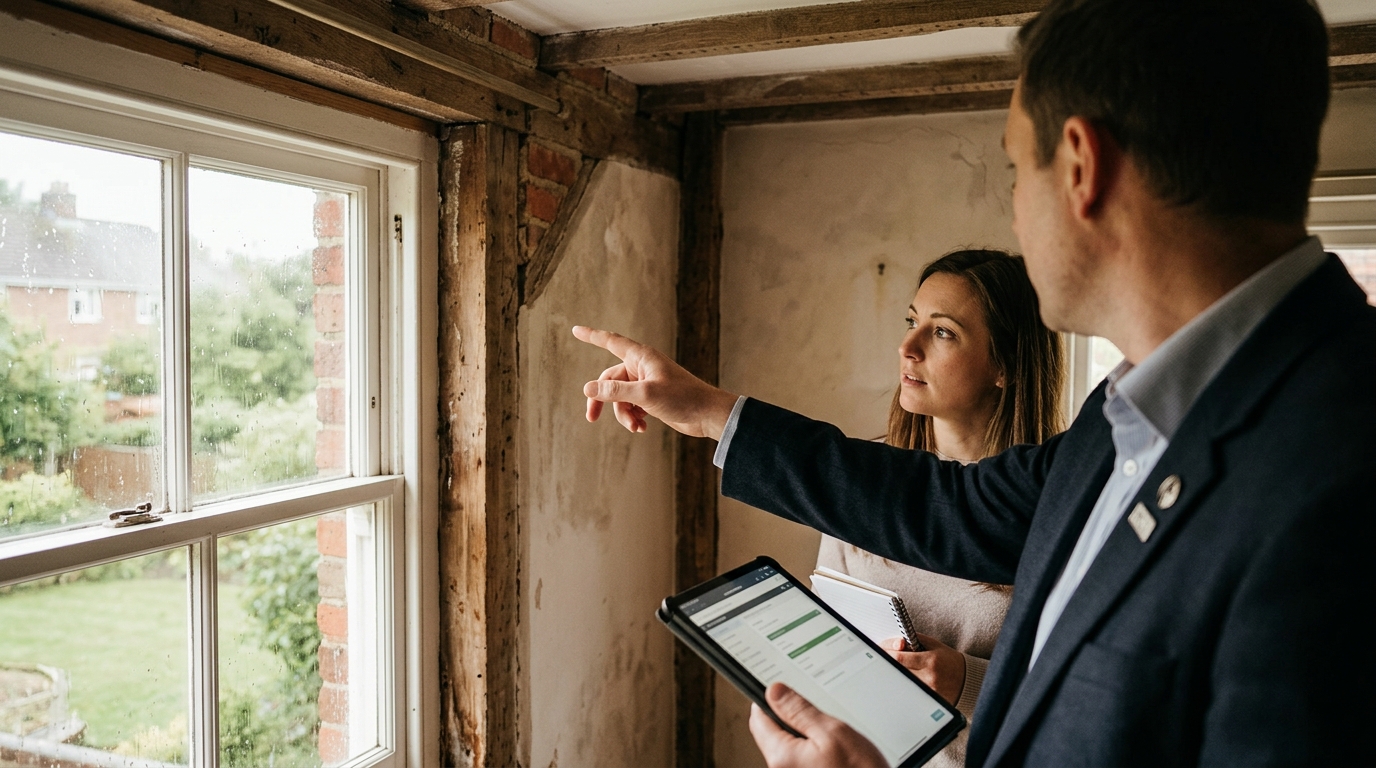
A Level 2 RICS Home Survey identifies visible defects, structural risks, and maintenance needs in residential properties. It provides a standardized assessment of a building's condition to help buyers and sellers make informed financial decisions. This guide details the specific structural, timber, and movement issues uncovered during the inspection process. It explains how A1 Surveyors Ltd applies these standards to ensure property safety and value accuracy.
Structural Defects
Foundations and Wall Integrity
Roof and Ceiling Conditions
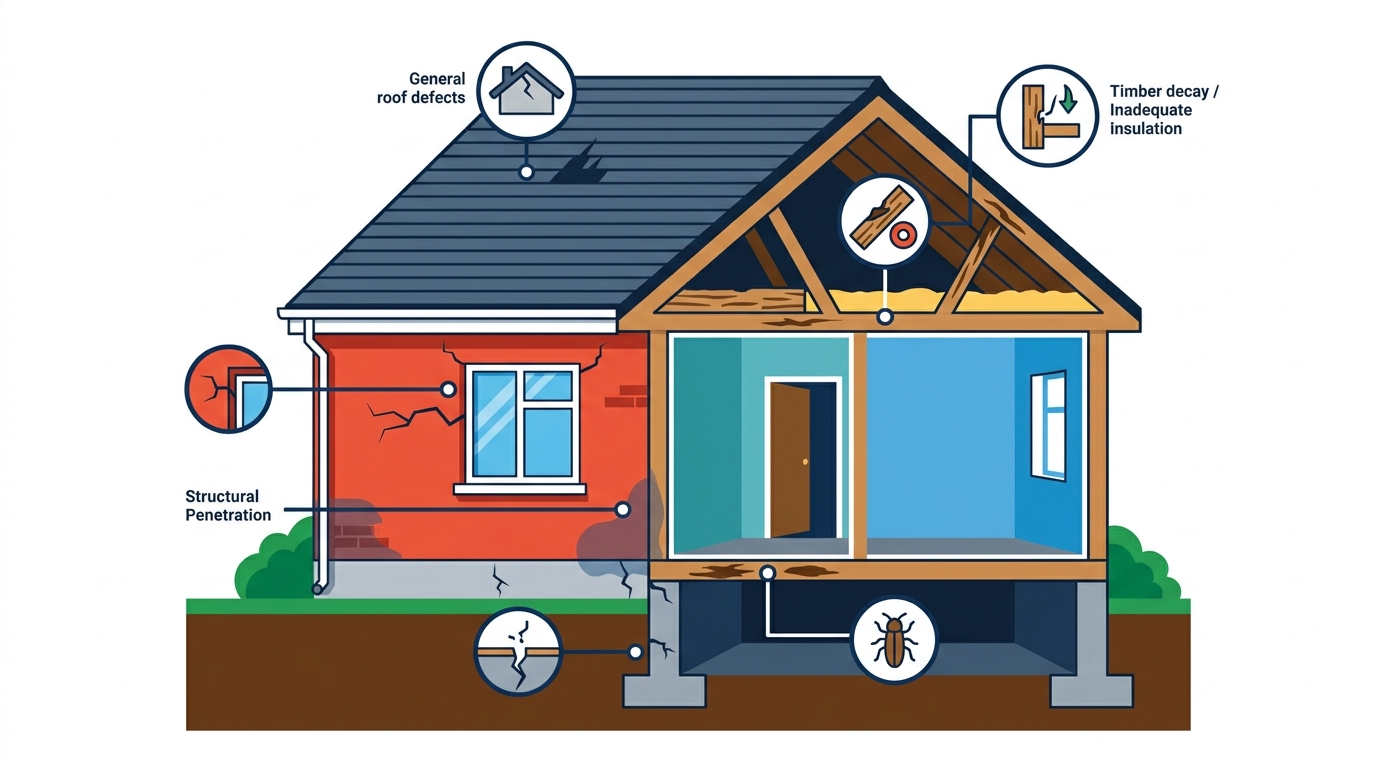
The roof structure is a critical load-bearing element. Surveyors inspect the roof space if access is available. They look for signs of water ingress, rot in rafters, or sagging. Ceiling deflection in the living areas below can also indicate roof truss failure. Identifying these issues early prevents costly emergency repairs. For additional details, review the .
Load-Bearing Walls
Timber Decay
Timber decay is the deterioration of wood caused by fungal growth or insect activity. It is a common issue in older properties where ventilation is poor. A Level 2 survey identifies visible signs of rot and infestation. The surveyor distinguishes between dry rot and wet rot, as their treatments differ significantly. For additional details, review the Home.
Dry Rot vs Wet Rot
Dry rot, caused by the fungus Serpula lacrymans, can spread through masonry. It thrives in damp conditions but can survive in dry areas once established. Wet rot, caused by Coniophora or Poria species, requires constant moisture. It is usually localized to the area of water ingress. The surveyor will note the extent of the decay and recommend professional treatment.
Insect Infestation
Wood-boring insects like house borers and deathwatch beetles can weaken timber. The surveyor looks for exit holes, frass (sawdust), and live insects. They assess the structural impact of the infestation. If the timber is severely compromised, replacement may be necessary. The report will highlight the urgency of treatment to prevent further spread.
Damp and Condensation
Subsidence and Movement
Subsidence is the downward movement of a building's foundations. It is a serious structural issue that can cause significant damage. A Level 2 survey identifies visible signs of subsidence and other forms of movement. The surveyor assesses the likely cause and the current state of the movement.
Identifying Subsidence
Subsidence often presents as diagonal cracks in walls. These cracks are typically wider at the top and narrower at the bottom. The surveyor measures the cracks and checks for signs of active movement. They may use crack monitors if the movement is recent. The report will state whether the movement is stable or ongoing.
Heave and Settlement
Heave is the upward movement of foundations, often caused by tree roots. Settlement is the downward movement due to soil compression. Both can cause structural damage if not managed. The surveyor notes the presence of trees near the property. They assess the potential impact of root growth on the foundations. This information helps buyers understand long-term maintenance needs.
Impact on Property Value
Active subsidence can significantly reduce a property's value. Lenders may refuse to provide a mortgage if the movement is unresolved. The surveyor's assessment helps buyers negotiate the price or request repairs. It also informs insurance decisions, as some policies exclude subsidence claims. Understanding the extent of the movement is crucial for financial planning.
Survey Comparison
Understanding the scope of different survey levels helps buyers choose the right service. The table below compares the three RICS survey types. It highlights the depth of inspection and the type of report provided.
| Survey Type | Scope of Inspection | Report Detail | Best For |
|---|---|---|---|
| Level 1 | Basic visual inspection of accessible areas | Summary of condition, no detailed defect list | New builds, simple properties |
| Level 2 | Standard inspection of visible elements | Detailed report on defects, risks, and repairs | Most residential properties, older homes |
| Level 3 | Comprehensive inspection, including non-visible areas | Extensive report on structural condition and history | Older, unusual, or extensively modified properties |
A Level 2 survey is the most common choice for standard residential purchases. It provides a balanced level of detail without the cost of a full structural survey. Buyers should consider the age and condition of the property when selecting a survey level.
Key Takeaways
- A Level 2 RICS Home Survey identifies visible structural defects, timber decay, and movement issues.
- Timber decay is caused by fungal growth or insect activity and requires prompt treatment.
- Subsidence is the downward movement of foundations and can significantly impact property value.
- The survey report provides a standardized assessment of the property's condition.
- Buyers should use the survey findings to negotiate price or request repairs.
- Lenders rely on survey reports to assess mortgage risk.
- Choosing the right survey level depends on the property's age and complexity.
Frequently Asked Questions
What is a Level 2 RICS Home Survey?
A Level 2 RICS Home Survey is a standardized inspection of a residential property. It assesses the visible condition of the building and identifies defects. The report provides a detailed account of issues and recommended repairs.
Does a Level 2 survey check for hidden defects?
No, a Level 2 survey does not involve invasive testing. It focuses on visible elements and accessible areas. Hidden defects may be identified if they show visible signs, but they are not guaranteed to be found.
How long does a Level 2 survey take?
A Level 2 survey typically takes two to four hours. The duration depends on the size and complexity of the property. The report is usually delivered within a few days of the inspection.
Can a Level 2 survey detect subsidence?
Yes, a Level 2 survey can identify visible signs of subsidence. The surveyor assesses the extent and likely cause of the movement. They will note if the movement appears active or stable.
Is a Level 2 survey sufficient for an older property?
A Level 2 survey is generally sufficient for most older properties. However, if the property has been extensively modified or has unusual features, a Level 3 survey may be more appropriate. Buyers should consider the property's history when choosing a survey level.
What happens if the survey finds serious defects?
If the survey finds serious defects, the buyer can use the findings to negotiate the price. They may also request that the seller repairs the issues before completion. In some cases, the buyer may choose to withdraw from the purchase.
Do I need a survey if I am buying a new build?
A Level 1 survey is often sufficient for new builds. However, a Level 2 survey can provide additional peace of mind. It may identify minor defects that are not covered by the builder's warranty.
How much does a Level 2 survey cost?
The cost of a Level 2 survey varies depending on the property's size and location. It is typically more expensive than a Level 1 survey but less than a Level 3 survey. Buyers should obtain quotes from multiple surveyors to compare prices.
Conclusion
A Level 2 RICS Home Survey is an essential tool for property buyers. It provides a detailed assessment of visible defects, structural risks, and maintenance needs. By identifying issues early, buyers can make informed decisions and avoid costly surprises. A1 Surveyors Ltd offers expert Level 2 and Level 3 surveys to help you navigate the property market with confidence. To book your survey, request a quote today.