

Buying your first home is a monumental financial milestone, yet the upfront costs often catch buyers off guard. Beyond the deposit and stamp duty, a professional property survey is a non-negotiable expense that protects your investment. According to recent industry data, approximately 1 in 6 first-time buyers encounter unexpected structural issues after moving in, highlighting the critical need for accurate pre-purchase assessments. This guide breaks down the most cost-effective survey options available in the UK market, helping you balance budget constraints with the necessity of due diligence. (Contact us)
Understanding the Three Main Survey Types
For first-time buyers, the terminology surrounding property surveys can be confusing. The Royal Institution of Chartered Surveyors (RICS) has standardized these services into three distinct tiers. Understanding the difference is the first step in managing your survey budget effectively.
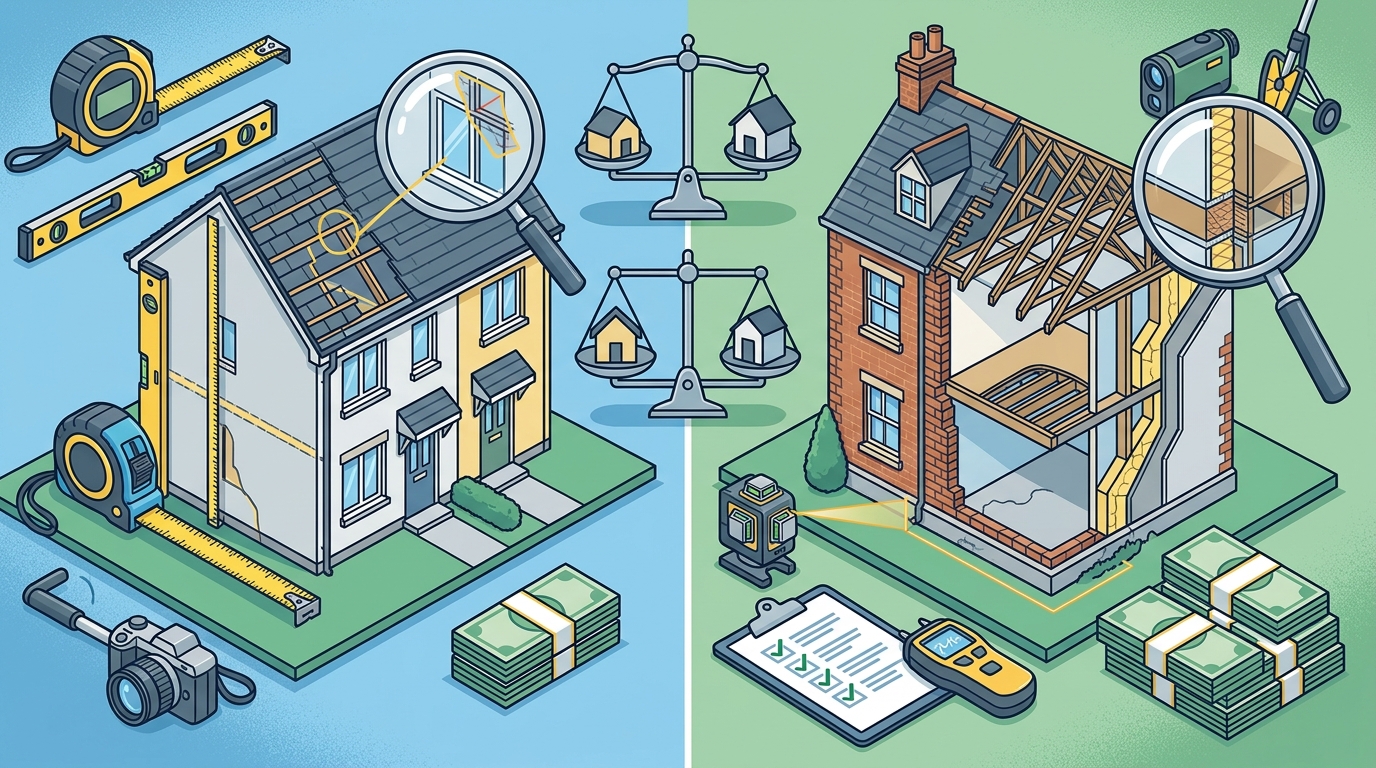
A RICS HomeBuyer Report is the most common choice for standard properties. It provides a visual inspection of the property's condition, highlighting urgent defects and potential risks. This report is non-intrusive, meaning the surveyor does not climb onto the roof or break open walls. It is ideal for flats, period properties, or homes built with conventional materials that appear to be in reasonable condition.
On the other end of the spectrum is the RICS Building Survey. Formerly known as a Level 3 survey, this is the most comprehensive option. It involves a detailed analysis of the property's structure and fabric. This survey is essential for larger homes, properties that have been significantly altered, or those in a state of disrepair. While more expensive, it provides a long-term maintenance plan and detailed advice on repairs.
Finally, there is the Property Valuation. This is often provided by mortgage lenders. It is a basic assessment of the property's market value to ensure it covers the loan amount. It is not a condition survey. A property valuation is not a substitute for a survey because it does not identify structural defects or repair needs. Relying solely on a lender's valuation can leave you vulnerable to costly surprises.
Level 2 vs Level 3: Which is More Cost-Effective?
The debate between Level 2 and Level 3 surveys often comes down to the age and condition of the property. Choosing the wrong tier can lead to either overspending on an unnecessary deep dive or under-inspecting a problematic home.
A Level 2 survey is generally more cost-effective for modern homes or those in good condition. The cost typically ranges from £300 to £400, depending on the property value and location. It offers a clear overview of visible defects, damp issues, and insulation problems. For a first-time buyer purchasing a standard semi-detached house, this level of detail is often sufficient to negotiate repairs or adjust the offer price.
However, a Level 3 survey can be more cost-effective in the long run for older properties. If you are buying a Victorian terrace or a converted barn, the risk of hidden structural issues is higher. The Level 3 survey costs between £500 and £800 or more. While the upfront cost is higher, the detailed repair estimates and maintenance timelines can save you thousands by preventing unexpected structural failures. It provides a roadmap for future capital expenditure, allowing you to budget for roof replacements or foundation repairs over the next decade.
When to Upgrade from a Valuation to a Full Survey
Many first-time buyers attempt to save money by accepting the free or low-cost valuation offered by their mortgage lender. This is a common financial trap. A lender's valuation is designed to protect the bank, not you. It answers the question, "Is this property worth the loan amount?" It does not answer, "Is this property structurally sound?"
You should upgrade to a full survey if the property is over 50 years old. Older buildings often have unique construction methods, such as timber frames or stone walls, which require specialized knowledge to assess. If the property has been extended or renovated, a full survey is necessary to check if the work was done to building regulation standards. Poorly executed extensions can lead to serious structural instability.
Additionally, if the property is in a remote area or has unusual features like thatched roofing, a standard valuation is insufficient. These properties require specialized knowledge to assess their value and condition accurately. Investing in a specialized survey ensures that you are aware of the specific maintenance requirements and insurance implications associated with these unique features.
Pricing Strategies and Hidden Costs
Managing the cost of a survey involves more than just comparing base prices. There are several strategies to ensure you get the best value without compromising on quality.
First, consider the timing of your survey. Surveys are typically valid for three to six months. If you are in a slow-moving market, you might secure a survey early in the process. However, if the market is fast-paced, you may need to pay for a re-inspection if the property falls through. Factor this potential cost into your budget.
Second, look for bundled services. Some surveying firms offer discounts if you book multiple services, such as a survey and a valuation together. A1 Surveyors Ltd, for instance, provides both Level 2 and Level 3 surveys along with professional valuations. Bundling can streamline the process and sometimes reduce the overall cost.
Third, be wary of hidden costs. Ensure the quote includes travel expenses and VAT. Some firms may advertise a low base price but add significant charges for travel or detailed reporting. Always ask for an all-inclusive quote before booking. Additionally, if the survey reveals issues that require further investigation, such as a damp test or structural engineer's report, these are usually extra costs. Budget for these potential follow-up expenses to avoid financial shock.
How to Choose a Chartered Surveyor
The cost of a survey is only part of the equation. The quality of the surveyor's work directly impacts the value you receive. Choosing a qualified professional is essential for accurate assessments and reliable advice.
Always verify that your surveyor is a member of the Royal Institution of Chartered Surveyors (RICS). This ensures they adhere to strict professional standards and have access to a complaints resolution process. RICS-regulated surveyors are trained to identify a wide range of issues, from subsidence to dampness, and provide impartial advice.
Experience matters. Look for a surveyor with specific experience in the type of property you are buying. If you are buying a listed building, you need a surveyor who understands heritage conservation. If you are buying a new build, you need someone familiar with new build defects and warranty schemes. A1 Surveyors Ltd has over 25 years of experience in the Midlands, providing a wealth of local knowledge that can be invaluable for first-time buyers.
Read reviews and ask for recommendations. Word-of-mouth referrals from estate agents or previous clients can provide insight into a surveyor's responsiveness and thoroughness. A surveyor who provides clear, jargon-free reports is worth the investment. You need to understand the findings to make an informed decision about your purchase.
Survey Options Comparison
| Survey Type | Best For | Approximate Cost | Depth of Inspection |
|---|---|---|---|
| RICS Level 2 (HomeBuyer) | Standard properties in good condition | £300 - £400 | Visual inspection, urgent defects |
| RICS Level 3 (Building) | Older, altered, or non-standard properties | £500 - £800+ | Detailed structural analysis, repair plans |
| Property Valuation | Mortgage lender requirements only | £0 - £150 | Market value assessment only |
Key Takeaways
- Never rely solely on a lender's valuation as it does not assess property condition.
- Level 2 surveys are cost-effective for standard homes under 50 years old.
- Level 3 surveys offer long-term savings for older or complex properties by identifying hidden structural issues.
- Always choose an RICS-regulated surveyor to ensure professional standards and impartial advice.
- Get all-inclusive quotes to avoid hidden travel or VAT charges.
- Consider local expertise as regional surveyors often have better knowledge of local construction styles and risks.
- Factor in follow-up costs for specialist reports if the initial survey reveals serious defects.
Frequently Asked Questions
How much does a Level 2 survey cost?
A Level 2 survey typically costs between £300 and £400, depending on the property value and location. It is a cost-effective option for standard properties.
Is a lender's valuation enough for a first-time buyer?
No, a lender's valuation is not enough. It only assesses the property's value for mortgage purposes and does not identify structural defects or repair needs.
When should I choose a Level 3 survey?
You should choose a Level 3 survey for properties over 50 years old, those that have been significantly altered, or those in a state of disrepair.
How long is a survey valid for?
A survey is generally valid for three to six months. If the purchase takes longer, you may need a re-inspection.
Can I negotiate the survey price?
While base prices are often fixed, you can negotiate by bundling services or asking for all-inclusive quotes to avoid hidden fees.
What is the difference between a HomeBuyer Report and a Building Survey?
A HomeBuyer Report (Level 2) is a visual inspection for standard properties, while a Building Survey (Level 3) is a detailed structural analysis for older or complex homes.
Do I need a survey if the property is new?
Yes, even new builds can have defects. A new build survey can identify issues with construction quality and warranty coverage.
Secure Your Investment Today
Protecting your first home starts with the right information. Don't leave your investment to chance. Contact A1 Surveyors Ltd today to book your RICS Home Survey or Valuation. Our expert team is ready to help you make an informed decision with confidence.