

Assessing the credibility of a property surveyor requires verifying their RICS membership, checking their professional indemnity insurance, and reviewing their disciplinary history. This guide covers how to validate licensing, insurance, and professional standing to ensure your property investment is protected by a qualified expert. For additional details, review the About Us.
Client References
Client references provide direct insight into a surveyor's reliability and communication skills. While professional qualifications are essential, the day-to-day experience of working with a surveyor is equally important. A credible surveyor should be willing to provide contact details for recent clients who can speak to their professionalism. For additional details, review the Legal Notice.
What to Ask References
When contacting references, ask about the timeliness of the report and the clarity of the findings. You want to know if the surveyor explained complex structural issues in plain language. Additionally, inquire about their responsiveness during the survey process. A good surveyor will be punctual and respectful of your time. For additional details, review the Privacy Policy.
Red Flags in References
If a surveyor refuses to provide any references, this is a significant red flag. Similarly, if references mention delays in report delivery or poor communication, consider looking elsewhere. The goal is to find a professional who treats your property purchase as a priority.
Professional Indemnity Insurance
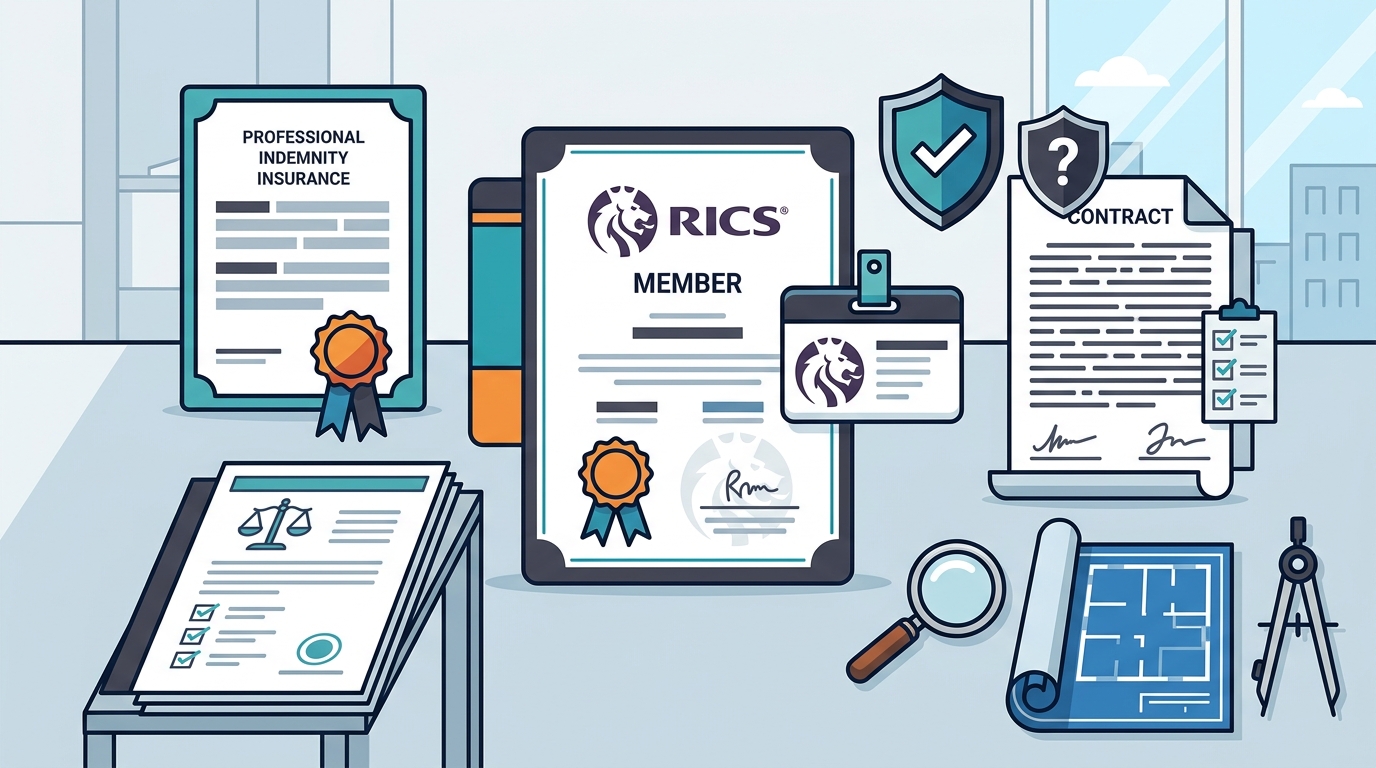
Professional indemnity insurance is a form of liability insurance that protects clients against financial loss caused by professional negligence. For property surveyors, this insurance is a critical safety net. If a surveyor misses a major defect that later causes significant financial loss, this insurance can cover the costs.
Why It Matters
Without professional indemnity insurance, you have no recourse if the surveyor makes a serious error. Most professional bodies, including RICS, require members to hold adequate insurance. You should always ask for a certificate of insurance before booking a survey. This document confirms that the surveyor is covered for the specific type of work you are commissioning.
Verifying Coverage
Check the policy limits to ensure they are sufficient for the value of your property. Higher-value properties may require higher levels of coverage. You can verify the insurance details directly with the insurer if you have any doubts. This step ensures that the surveyor is financially protected and, by extension, so are you.
Surveyor Licensing
Surveyor licensing is the formal authorization granted by a regulatory body that allows an individual to practice as a surveyor. In the UK, there is no single statutory license for all surveyors, but professional membership acts as a de facto license. This membership ensures that the surveyor meets specific educational and ethical standards.
Regulatory Framework
The Royal Institution of Chartered Surveyors (RICS) is the primary regulatory body for property surveyors in the UK. Membership in RICS indicates that the surveyor has met rigorous academic and professional requirements. This framework helps maintain high standards across the industry. It provides a level of assurance that the surveyor is qualified to perform the work.
Importance of Licensing
Licensing ensures that surveyors are held accountable to a code of conduct. It also provides a mechanism for resolving disputes. If a licensed surveyor fails to meet professional standards, they can face disciplinary action. This accountability is crucial for protecting consumers in the property market.
Professional Memberships
Professional memberships are affiliations with industry bodies that signify a surveyor's commitment to their field. These memberships often come with ongoing professional development requirements. They demonstrate that the surveyor is keeping their knowledge up to date with the latest building regulations and market trends.
Key Memberships to Look For
RICS is the most recognized membership for property surveyors. Other relevant memberships may include the Institute of Building Surveyors or local surveyor associations. Each membership has its own set of standards and requirements. The more reputable the membership, the greater the assurance of quality.
Benefits of Membership
Complaint History
Complaint history is a record of formal grievances filed by clients against a surveyor. Reviewing this history can reveal patterns of poor service or negligence. Most professional bodies maintain a register of complaints and their outcomes. This transparency helps consumers make informed decisions.
How to Check Complaints
You can check the RICS register of complaints to see if a surveyor has been subject to formal grievances. Look for the nature of the complaints and how they were resolved. A single minor complaint may not be a cause for concern, but a pattern of serious complaints is a warning sign. The resolution of these complaints also indicates the surveyor's willingness to address issues.
Interpreting the Data
Consider the context of the complaints. Were they related to communication issues or substantive errors in the survey? The severity of the complaints is more important than the number. A surveyor with a clean complaint history is generally a safer choice. This check is a simple but effective way to assess credibility.
Experience Verification
Experience verification is the process of confirming a surveyor's practical history in the field. While qualifications are important, hands-on experience is equally valuable. A surveyor with extensive experience is more likely to identify subtle defects that a less experienced professional might miss.
Years of Experience
Ask how many years the surveyor has been practicing. More years of experience generally correlate with a broader range of knowledge. However, the type of experience is also important. A surveyor who specializes in older properties may have different expertise than one who focuses on new builds. Ensure their experience aligns with the type of property you are purchasing.
Specialization
Look for evidence of specialization in specific property types or regions. A surveyor who has worked extensively in Nottingham or the Midlands may have a deeper understanding of local building practices. This regional knowledge can be invaluable in identifying potential issues. Specialization adds a layer of credibility to their overall profile.
Disciplinary History
Disciplinary history is a record of formal sanctions imposed on a surveyor for breaches of professional conduct. This history is maintained by professional bodies and is a key indicator of a surveyor's integrity. A clean disciplinary record is a strong sign of a trustworthy professional.
Types of Disciplinary Actions
Disciplinary actions can range from warnings to suspension or expulsion from a professional body. The severity of the action reflects the seriousness of the breach. You should check for any history of disciplinary actions before engaging a surveyor. This check is crucial for ensuring that the surveyor adheres to ethical standards.
Accessing Records
Professional bodies like RICS provide access to disciplinary records. You can search for a surveyor's name to see if they have been subject to any sanctions. If a surveyor has a history of disciplinary actions, it is important to understand the context. However, a clean record is the most desirable outcome. This verification step is a fundamental part of assessing credibility.
RICS Membership
RICS membership is a designation that indicates a surveyor has met the high standards set by the Royal Institution of Chartered Surveyors. This membership is widely recognized in the property industry. It signifies that the surveyor is committed to professional excellence and ethical practice.
Levels of Membership
There are different levels of RICS membership, including Associate (ARICS) and Chartered (MRICS). Chartered status is the highest level and indicates a significant level of expertise. You should aim to work with a Chartered Surveyor for major property transactions. This level of membership provides the greatest assurance of quality.
Verifying RICS Status
You can verify a surveyor's RICS membership through the RICS online register. This register provides details of their membership status and any disciplinary actions. It is a reliable source of information for assessing a surveyor's professional standing. Using this tool is a quick and effective way to confirm their credentials.
Licensing Verification
Licensing verification is the process of confirming that a surveyor holds valid credentials from a recognized professional body. This step ensures that the surveyor is authorized to practice and is held to professional standards. It is a critical part of the due diligence process.
Steps to Verify
Start by asking the surveyor for their professional registration number. Then, use this number to search the relevant professional register. This will confirm their current status and any conditions attached to their membership. If the surveyor cannot provide this information, it is a red flag. Verification is a simple process that can save you from potential issues.
Importance of Verification
Verification protects you from unqualified individuals who may pose as surveyors. It ensures that the person conducting your survey is legitimate and competent. This step is essential for maintaining trust in the property market. By verifying licensing, you are taking a proactive step to protect your investment.
Insurance Coverage
Insurance coverage is the extent of financial protection provided by a surveyor's professional indemnity policy. Understanding the coverage limits is important for assessing the level of protection you have. Adequate coverage ensures that you are protected in the event of a significant error.
Checking Policy Limits
Ask the surveyor for details of their insurance policy, including the coverage limits. Ensure that the limits are sufficient for the value of your property. Higher-value properties may require higher levels of coverage. You can verify these details with the insurer if necessary. This check ensures that the surveyor is adequately protected.
Why Coverage Matters
Insurance coverage is a financial safeguard for you as the client. If a surveyor makes a mistake that leads to financial loss, the insurance can cover the costs. Without adequate coverage, you may be left to bear the financial burden. This is why checking insurance coverage is a crucial part of assessing credibility.
Disciplinary History Checks
Disciplinary history checks are a systematic review of a surveyor's record of professional conduct. This check involves searching professional registers for any sanctions or warnings. It is a thorough way to assess a surveyor's integrity and reliability.
Conducting the Check
Use the RICS register or other professional body registers to search for the surveyor's name. Look for any entries related to disciplinary actions. Pay attention to the nature and severity of the actions. A clean record is the best outcome, but if there are entries, understand the context. This check is a vital part of the due diligence process.
Interpreting Results
Interpret the results in the context of the surveyor's overall profile. A single minor warning may not be a major concern, but a pattern of serious breaches is a red flag. Consider the recency of the actions as well. Recent disciplinary actions may be more concerning than older ones. This interpretation helps you make an informed decision.
Comparison of Verification Methods
| Method | Purpose | Source | Reliability |
|---|---|---|---|
| Client References | Assess communication and reliability | Surveyor's client list | Subjective |
| Professional Indemnity Insurance | Verify financial protection | Insurance certificate | High |
| Surveyor Licensing | Confirm authorization to practice | Professional register | High |
| Professional Memberships | Check industry affiliations | Membership records | Medium |
| Complaint History | Review client grievances | Professional body register | High |
| Experience Verification | Confirm practical history | CV and interviews | Medium |
| Disciplinary History | Check for sanctions | Professional body register | High |
| RICS Membership | Verify professional status | RICS online register | High |
| Licensing Verification | Confirm valid credentials | Professional register | High |
| Insurance Coverage | Check policy limits | Insurance certificate | High |
| Disciplinary History Checks | Systematic review of conduct | Professional body register | High |
Key Takeaways
- Always verify a surveyor's RICS membership through the official online register.
- Request a certificate of professional indemnity insurance to ensure financial protection.
- Check the disciplinary history and complaint records for any red flags.
- Ask for client references to assess communication and reliability.
- Verify the surveyor's licensing and professional credentials.
- Consider the surveyor's experience and specialization in your property type.
- Use the RICS register to confirm the surveyor's current status and any sanctions.
- Ensure the insurance coverage limits are sufficient for the value of your property.
Frequently Asked Questions
What is RICS membership?
RICS membership is a designation that indicates a surveyor has met the high standards set by the Royal Institution of Chartered Surveyors. It signifies professional excellence and ethical practice.
Why is professional indemnity insurance important?
Professional indemnity insurance protects clients against financial loss caused by professional negligence. It is a critical safety net for property transactions.
How can I check a surveyor's disciplinary history?
You can check a surveyor's disciplinary history through the RICS register or other professional body registers. Look for any entries related to sanctions or warnings.
What should I ask client references?
Ask references about the timeliness of the report, clarity of findings, and responsiveness during the survey process. This helps assess the surveyor's reliability and communication skills.
Is there a statutory license for property surveyors in the UK?
There is no single statutory license for all surveyors in the UK, but professional membership acts as a de facto license. RICS membership is the primary regulatory framework.
How do I verify a surveyor's licensing?
Ask the surveyor for their professional registration number and use it to search the relevant professional register. This confirms their current status and any conditions attached to their membership.
What are the levels of RICS membership?
There are different levels of RICS membership, including Associate (ARICS) and Chartered (MRICS). Chartered status is the highest level and indicates significant expertise.
Why is experience verification important?
Experience verification confirms a surveyor's practical history in the field. A surveyor with extensive experience is more likely to identify subtle defects that a less experienced professional might miss.
Conclusion
Assessing the credibility of a property surveyor is a critical step in protecting your investment. By verifying their RICS membership, checking their professional indemnity insurance, and reviewing their disciplinary history, you can ensure that you are working with a qualified and trustworthy professional. Contact A1 Surveyors Ltd to book a Level 2 or Level 3 RICS Home Survey and make an informed decision about your property.