

Choosing the right property survey is one of the most critical financial decisions you will make during a house purchase. According to recent industry data, over 60% of homebuyers underestimate the cost of hidden defects, leading to unexpected expenses that can exceed £10,000 in the first year of ownership. A1 Surveyors Ltd has spent over 25 years helping clients navigate these complexities across the Midlands and beyond. We have surveyed more than 5,000 properties, maintaining a 99% client satisfaction rate by ensuring every homeowner receives the precise level of inspection their specific property demands. This guide breaks down the differences between Level 2 and Level 3 RICS Home Surveys to help you make an informed decision.
Understanding RICS Survey Levels
The Royal Institution of Chartered Surveyors (RICS) has standardized property inspections into three distinct levels. These levels are designed to provide varying degrees of detail depending on the age, condition, and construction type of the property. RICS Home Survey is a standardized inspection framework that ensures consistency and reliability across the UK property market. Understanding these distinctions is vital for avoiding costly surprises after you have signed the contract.
Many buyers mistakenly assume that a mortgage valuation provided by their lender is sufficient. A mortgage valuation is a basic assessment for the lender's benefit, not a detailed inspection for your protection. It does not identify structural defects, damp, or subsidence risks. To protect your investment, you must commission a dedicated RICS survey from a qualified professional. At A1 Surveyors Ltd, our team of expert chartered surveyors ensures that every report is tailored to the specific needs of the property in question.
Level 2 Survey: The Standard Choice
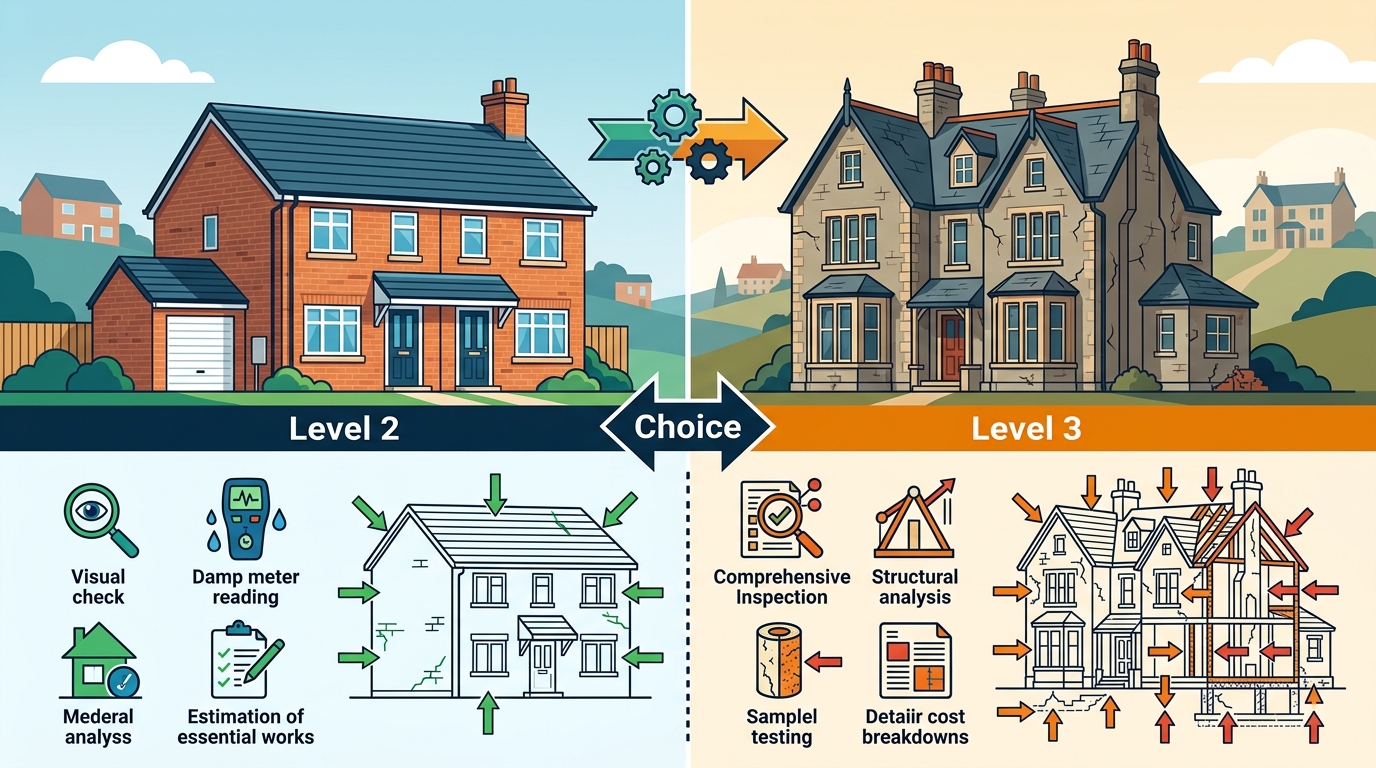
A Level 2 RICS Home Survey, formerly known as a HomeBuyer Report, is the most popular choice for standard properties. It is designed for conventional homes that are in reasonable condition and have not been significantly altered. This survey provides a visual inspection of the property's condition, highlighting any obvious defects that require further investigation.
What Does a Level 2 Survey Include?
The Level 2 survey covers the visible structure and fabric of the property. It includes a traffic-light condition rating system for each element inspected, such as roofs, walls, windows, and drainage. This system uses red, amber, and green indicators to show the severity of any issues found. Red indicates defects that are serious and require immediate attention, amber suggests defects that need further investigation, and green means the condition is satisfactory.
This survey also includes a market valuation and a reinstatement cost calculation. The valuation helps you understand the current market value of the property, while the reinstatement cost is essential for arranging adequate buildings insurance. If you are purchasing a standard brick-and-mortar home built within the last 50 years, a Level 2 survey is often the most cost-effective option. You can request a Level 2 survey quote to get started.
Limitations of the Level 2 Survey
While comprehensive for its scope, the Level 2 survey does not involve invasive testing. Surveyors will not lift floorboards, dig up gardens, or enter roof spaces that are inaccessible. If you suspect hidden issues, such as subsidence or severe damp, a Level 2 survey may not be sufficient. In such cases, you may need to consider a Level 3 survey or additional specialist reports.
Level 3 Survey: The Comprehensive Option
A Level 3 RICS Building Survey is the most detailed inspection available. It is designed for larger, older, or unusual properties, such as listed buildings, period homes, or those that have undergone significant structural alterations. This survey provides an in-depth analysis of the property's condition, including detailed advice on defects, repairs, and maintenance.
Depth of Analysis
The Level 3 survey goes beyond the visible surface. Surveyors will inspect accessible roof spaces, cellars, and lofts in detail. They will also look for signs of structural movement, dampness, and timber decay with greater precision. The report includes detailed recommendations for repairs and maintenance, along with estimated costs and timelines. This level of detail is invaluable for buyers who want to understand the full scope of potential issues before committing to a purchase.
For properties built before 1900 or those with non-standard construction methods, a Level 3 survey is highly recommended. The complexity of older buildings often requires a more nuanced approach to identify potential risks. You can book a Level 3 survey through our online portal for a thorough assessment.
When is a Level 3 Survey Necessary?
You should consider a Level 3 survey if the property is significantly altered, extended, or if you plan to carry out major renovations. It is also essential for listed buildings, where any changes must comply with strict conservation regulations. The detailed nature of this survey helps you negotiate the purchase price more effectively by providing concrete evidence of necessary repairs.
Comparison of Survey Types
To help you decide which survey is right for you, we have compiled a comparison of the key features of Level 2 and Level 3 RICS Home Surveys.
| Feature | Level 2 Survey | Level 3 Survey |
|---|---|---|
| Property Type | Standard, conventional homes | Older, larger, or unusual properties |
| Depth of Inspection | Visual inspection of accessible areas | Detailed inspection of all accessible areas |
| Condition Rating | Traffic-light system (Red, Amber, Green) | Detailed narrative with severity assessment |
| Valuation Included | Yes | No (available as an add-on) |
| Reinstatement Cost | Yes | Yes |
| Best For | Post-1900 homes in good condition | Pre-1900 homes or major renovations |
Understanding these differences is crucial for making an informed decision. For more insights on property surveying standards, you can read RICS guidance on home reports.
When to Choose Which Survey
Selecting the correct survey depends on several factors, including the age of the property, its construction type, and your planned renovations. If you are buying a modern apartment or a standard semi-detached house built in the last 50 years, a Level 2 survey is likely sufficient. It provides a good balance of detail and cost-effectiveness.
However, if you are purchasing a period property, a listed building, or a home that has been significantly extended, a Level 3 survey is essential. The additional cost is justified by the depth of information provided, which can save you thousands in unexpected repair costs. According to data from the Consumer Council for Water, hidden defects are a leading cause of financial loss in property transactions, making thorough surveys a critical investment.
At A1 Surveyors Ltd, we offer personalized advice to help you choose the right survey for your specific situation. Our team is available to discuss your property's unique characteristics and recommend the most appropriate inspection level. You can contact us for expert guidance.
Key Takeaways
- Level 2 Surveys are ideal for standard, conventional homes in reasonable condition, offering a visual inspection with a traffic-light condition rating.
- Level 3 Surveys provide a comprehensive analysis for older, larger, or altered properties, including detailed repair recommendations and cost estimates.
- Mortgage Valuations are not a substitute for a RICS survey, as they are designed for the lender's benefit, not the buyer's protection.
- A1 Surveyors Ltd has over 25 years of experience and has surveyed more than 5,000 properties with a 99% client satisfaction rate.
- Hidden Defects can cost homeowners thousands in unexpected repairs, making a thorough survey a critical financial safeguard.
- Traffic-Light Ratings in Level 2 surveys help prioritize issues, with red indicating serious defects requiring immediate attention.
- RICS Standards ensure consistency and reliability in property inspections, providing peace of mind for homebuyers across the UK.
Frequently Asked Questions
What is the difference between a Level 2 and Level 3 survey?
A Level 2 survey is a visual inspection suitable for standard properties, while a Level 3 survey is a detailed structural inspection for older or altered homes. The Level 3 survey provides more in-depth analysis and repair recommendations.
Is a mortgage valuation enough for a home purchase?
No, a mortgage valuation is a basic assessment for the lender. It does not identify structural defects or hidden issues that could affect your safety and finances. A dedicated RICS survey is necessary for comprehensive protection.
How long does a RICS survey take?
The duration depends on the size and complexity of the property. A Level 2 survey typically takes 2-4 hours, while a Level 3 survey may take 4-8 hours. The report is usually delivered within 5-7 working days.
Do I need a survey for a new build property?
While new builds are less likely to have structural issues, a survey can still identify defects in workmanship or materials. A Level 2 survey is often sufficient, but a snagging list may also be beneficial.
What is a RICS Home Survey?
A RICS Home Survey is a standardized inspection framework that provides an objective assessment of a property's condition. It helps buyers make informed decisions and avoid costly surprises after purchase.
Can I add a valuation to a Level 3 survey?
Yes, you can add a market valuation to a Level 3 survey as an optional extra. This provides you with an independent assessment of the property's current market value.
How much does a RICS survey cost?
The cost varies based on the property value, size, and location. A Level 2 survey typically costs between £400-£600, while a Level 3 survey may range from £600-£1,000. Contact us for a precise quote.
Get Your Survey Quote
Don't leave your property purchase to chance. Whether you need a Level 2 or Level 3 RICS Home Survey, A1 Surveyors Ltd is here to provide the expertise and precision you need. Our team of expert chartered surveyors is ready to help you make an informed decision. Visit our Quotes and Bookings page to get started today.